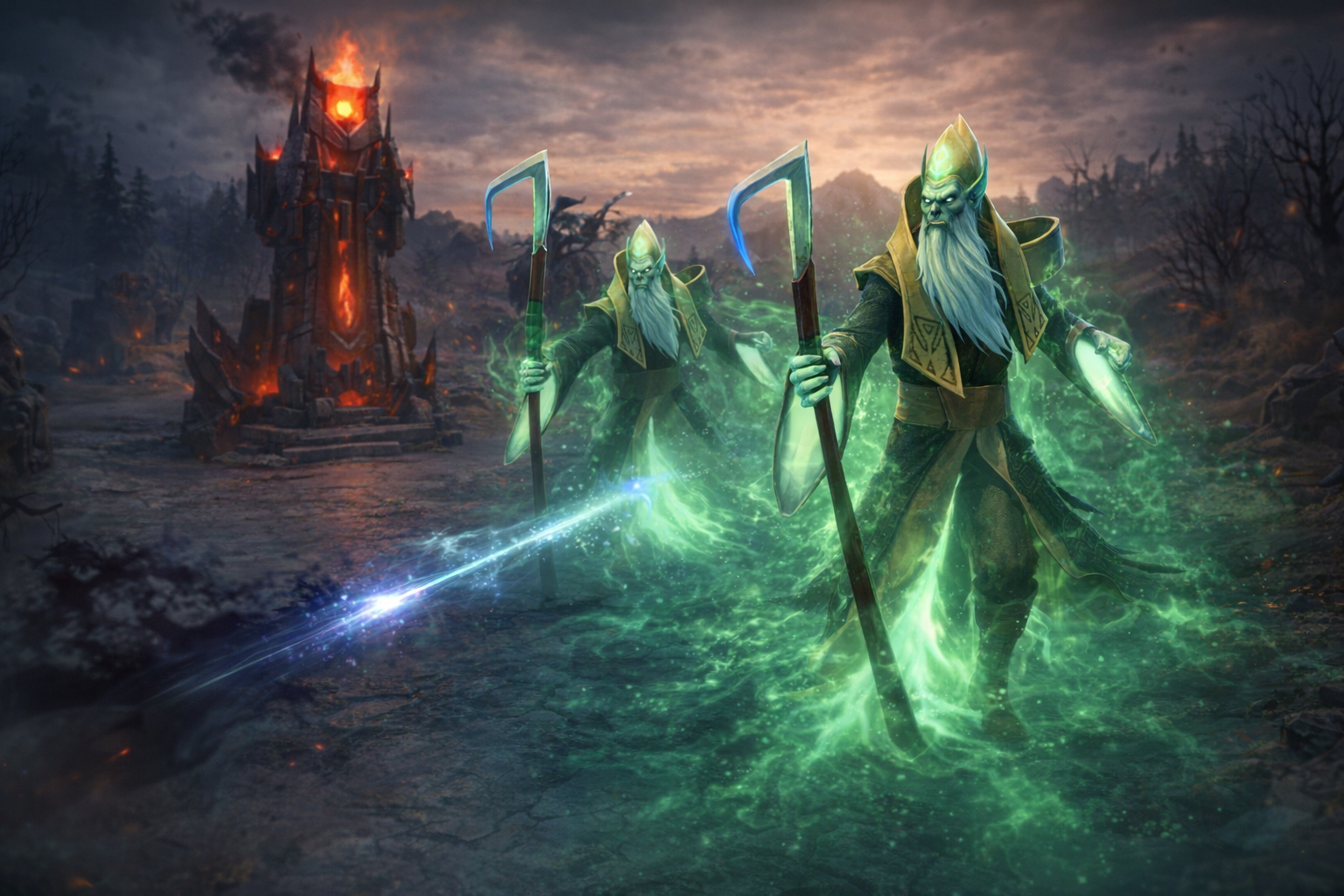
You’re twenty-eight minutes in, your carry is farming the triangle, and the enemy Necro is somehow standing in front of your tier two like he owns the deed. Someone throws a silence, someone else lines up a projectile, and he splits into illusions, walks away with half his health bar still intact, then returns five seconds later with Death Pulse and that miserable green aura chewing through everyone. The item looks wrong for the hero until you play against it. Then it starts to look annoyingly perfect.
Manta Style on Necrophos feels like one of those Dota item choices that only makes sense once you stop comparing tooltip to tooltip. Eul’s Scepter and Manta both offer a dispel angle, sure. The way they let Necrophos play the map and survive fights is completely different.
Necrophos Has Always Been Greedy About Positioning
Necrophos wins fights by being present for too long.
That sounds simple, but it explains almost every weird item choice the hero has ever made. He wants to stand close enough for Heartstopper Aura to matter, close enough to land Death Pulse value, close enough to threaten Reaper’s Scythe, and far enough away that he doesn’t get chain-disabled into a gray screen. His whole hero design rewards the player who can occupy the ugly middle space between frontliner and backliner.
That space demands movement speed.
Necrophos has never been a clean blink-in initiator or a hero that instantly deletes the backline from fog. He waddles. He edges forward. He punishes overcommitment. Every extra bit of speed changes whether Ghost Shroud buys time or simply delays death. It changes whether you get the second Death Pulse. It changes whether the enemy carry has to keep hitting you while your team collapses, or gets to step around you and murder your supports.
This is why Manta’s stat profile matters more than it looks. Necrophos appreciates armor because he often eats right-clicks while Ghost Shroud is unavailable or dangerous to use. He appreciates movement speed because staying at the edge of deathball range is the hero’s entire job. He appreciates extra bodies because they create friction in fights and shove lanes when nobody wants to show.
Eul’s gives useful tools. Manta gives Necrophos a way to keep playing Necrophos.
The Dispel Comparison Is Misleading
The lazy comparison is “both items dispel, so why pay more?” That misses the actual fight pattern.
When Necrophos uses Eul’s on himself, he buys a small window of safety while becoming predictable. He goes up. Everyone sees where he will land. Stuns get pre-aimed. Silences get buffered. The enemy team gets a neat little countdown to resume killing him.
That still has value. Eul’s can dodge spells, purge many annoying debuffs, interrupt channels when used offensively, and create setup in certain fights. It is cheaper, the buildup can feel good, and the mana regeneration is welcome on a hero that can burn through resources during long map sequences.
Manta’s dispel works differently. You remove the problem and stay on the ground. You can keep walking, juke with illusions, force target confusion, and maintain pressure. There’s no self-cyclone pause where the enemy gets to arrange the murder scene under your landing spot.
That distinction is massive on Necrophos because his defensive windows are already awkward. Ghost Shroud can save you, but it can also invite magical burst. Lotus Orb can punish targeted spells, but it doesn’t solve every status problem. BKB can be game-winning, yet Necrophos often wants survivability that works around fights rather than only during one committed timing.
Manta gives him a purge that doesn’t ask him to disappear from the fight.
Nullifier Changes the Whole Conversation
The nastiest reason Manta rises above Eul’s is Nullifier.
Necrophos is one of the heroes who can make a game feel unwinnable until the enemy carry buys Nullifier. The item is brutal because it attacks the exact fantasy Necrophos wants to live inside: defensive buffs, kiting tools, and greedy survivability layers. Once Nullifier enters the game, many of the usual “just keep yourself alive” buttons become far less reliable.
Eul’s and Wind Waker are especially vulnerable in that context. If the Nullifier effect is already on you, defensive cyclone play can get stripped away. That means the classic panic button can fail right when you need it most.
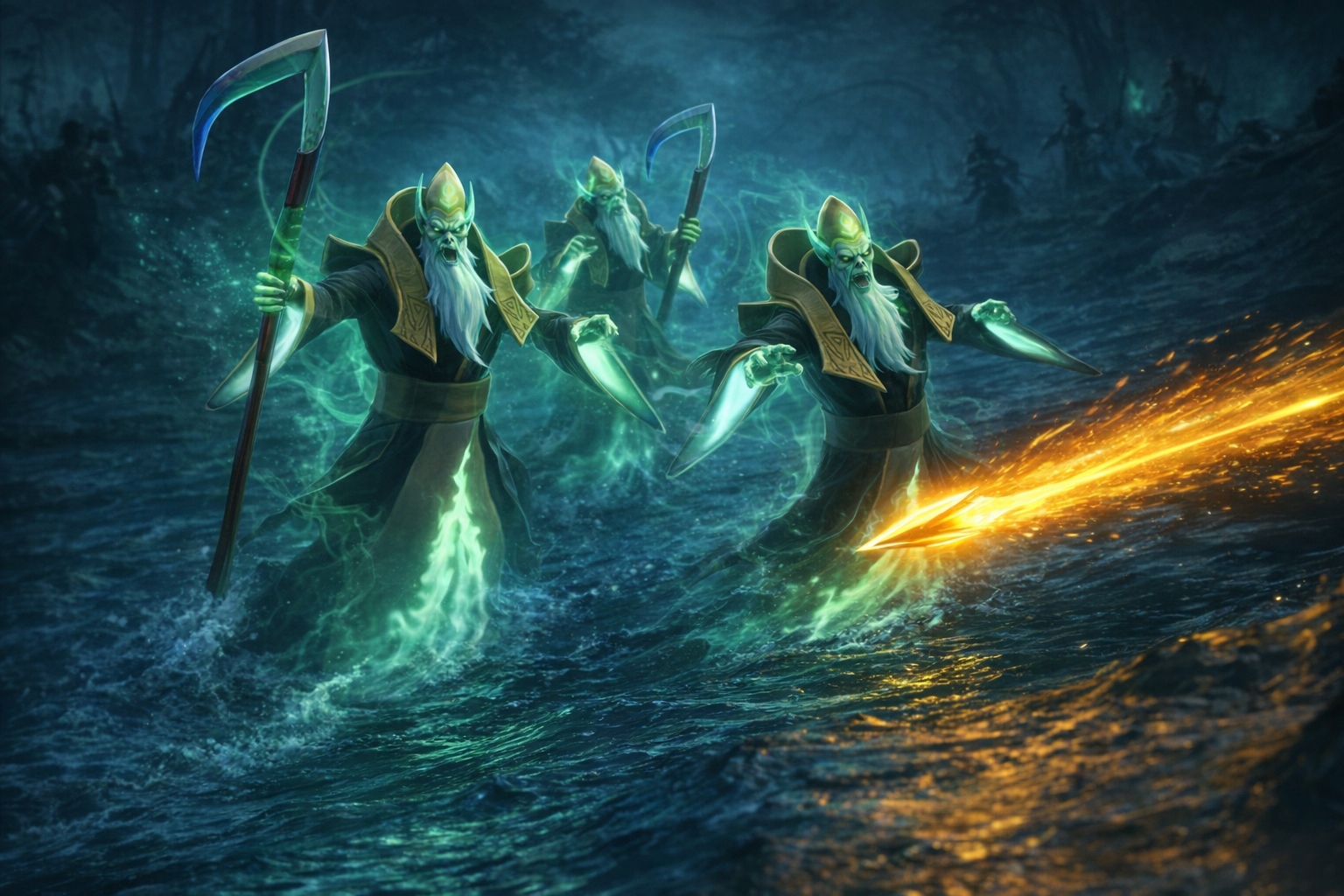
Manta has a different angle: timing the split can disjoint incoming projectiles, including the kind of targeted threat that starts the whole disaster. This requires real hands. You don’t get to press Manta after everything has already connected and pretend you solved the game. The value is in using it before impact, turning a targeted commitment into wasted time while you keep moving.
That is why the item feels so much better in high-level games than it may look in a vacuum. Strong players are buying a timing window against one of the main ways carries eventually solve Necrophos. They are buying a button that can beat the initiation sequence rather than a button that hopes to function after the counter has already landed.
Wind Waker changes the equation later. The upgrade is an absurdly powerful luxury when the game goes long and you can afford it. A completed Wind Waker offers mobility and save potential that Eul’s alone cannot match. The issue is the road there. Sitting on basic Eul’s in the midgame against lineups rushing the tools to kill Necrophos can feel like bringing a polite umbrella to a meteor shower.
Manta Lets Necrophos Play the Map Like a Menace
The lane-shove part matters more than people give it credit for.
Necrophos is frequently built around being hard to remove from lanes. Radiance, Boots of Travel, tank items, and constant wave pressure turn him into a map irritant. He shows in one lane, forces a response, survives the first move, then appears somewhere else while the map gets smaller for the enemy team.
Manta supports that plan beautifully.
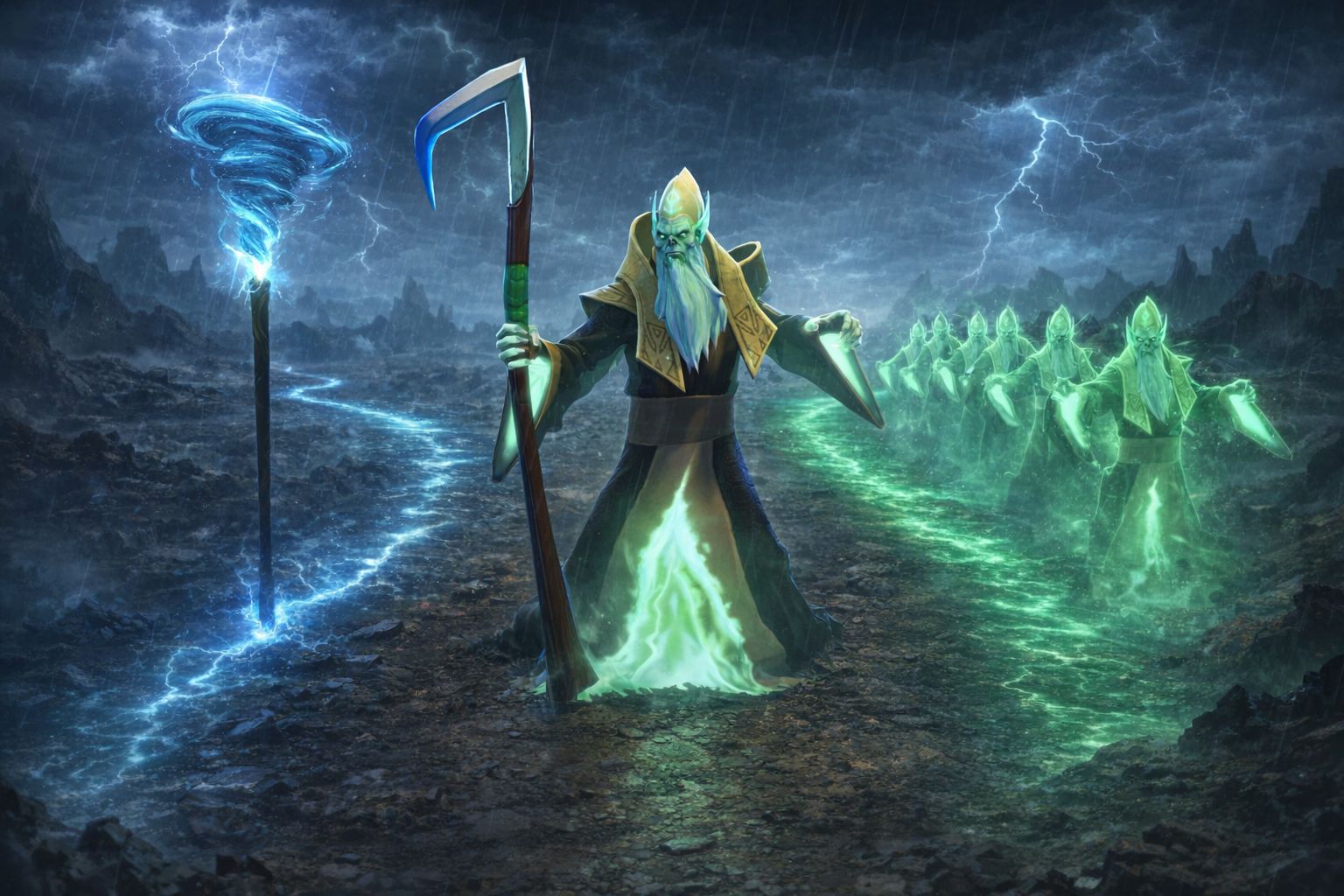
Illusions can push waves, scout dangerous areas, and carry aura-based pressure in ways that make side lanes annoying to manage. Necrophos illusions are not Phantom Lancer illusions. Nobody is pretending they will solo supports or burn down towers like a real illusion carry. Their job is to create information and lane movement without forcing the real hero to stand somewhere suicidal.
Pair that with Radiance-style map pressure and Boots of Travel, and the item starts looking less like a defensive luxury and more like a macro tool. You can shove a wave while keeping your real body safer. You can force creep equilibrium away from your towers. You can make the enemy reveal heroes to clean up lanes that your illusions touched.
That has real pub value because most pub teams are awful at cleanly punishing distributed pressure. They either overreact with too many heroes or ignore the lane until a tower takes damage. Necrophos loves both outcomes. If they come, he wastes time. If they don’t, the map bleeds.
The Stats Are Boring Until They Win the Fight
Manta’s stat package looks odd because Necrophos is an intelligence hero whose damage comes mostly from spells and sustained presence. Agility on Necrophos will never feel as natural as strength on a frontliner or raw spell amp on a nuker.
Then you remember what agility gives him defensively: armor.
Necrophos often dies in the physical damage portion of fights. Ghost Shroud amplifies healing and changes how enemies want to damage you, but it also creates moments where physical and magical considerations become a dance. If you are forced out of Shroud or caught before using it, armor becomes very real. Against carries who are already thinking about Nullifier, Abyssal-style lockdown, or simply hitting you until the green man stops moving, extra armor from item stats matters.
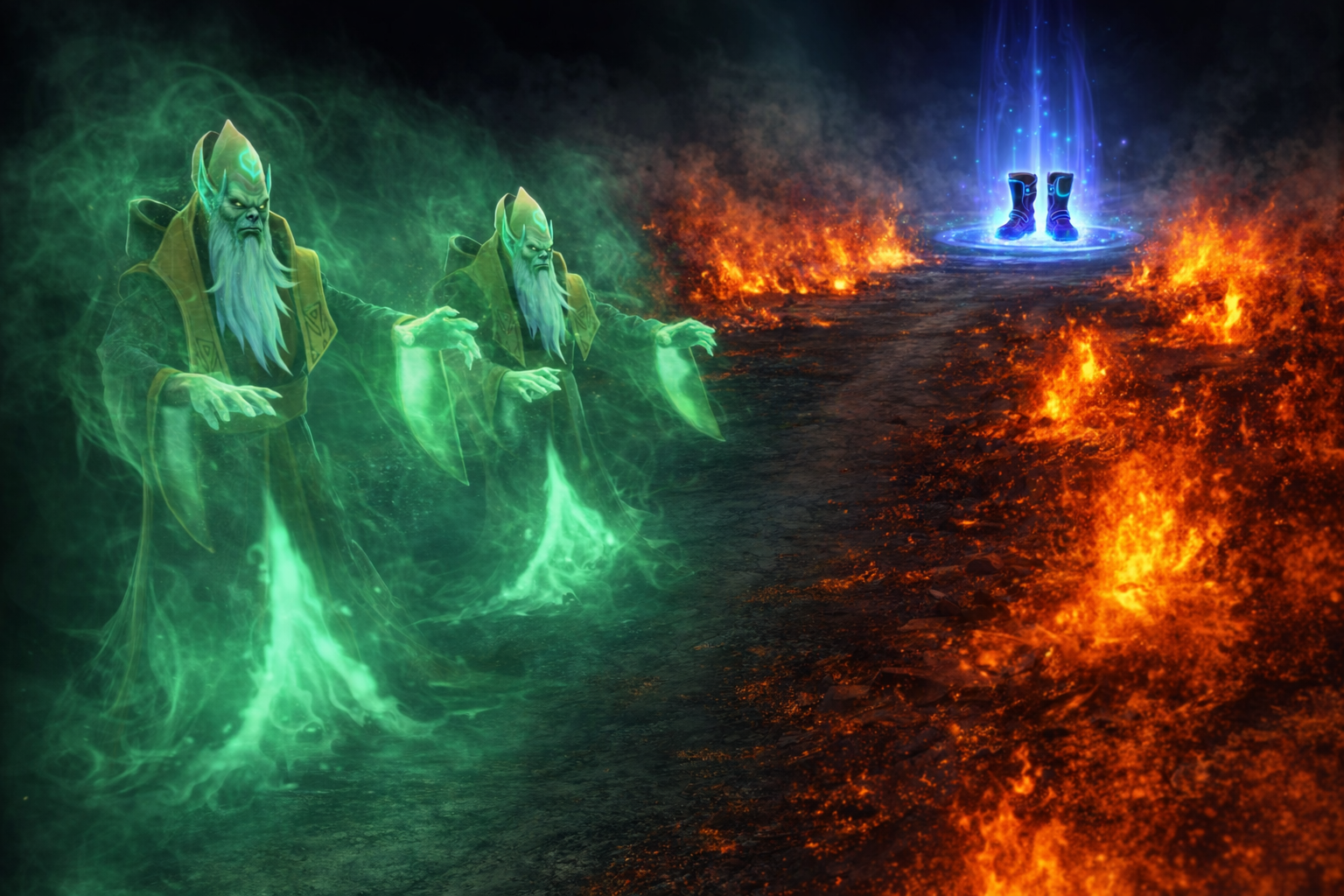
The movement speed is even cleaner. Necrophos wants to kite melee cores, chase low-health heroes for Scythe angles, and drift through fights without planting himself in the center of every stun. Manta helps every version of that. You feel it when escaping, but you also feel it when pressuring. Faster Necrophos gets to choose more engagements, and that’s a disgusting trait on a hero whose best fights are the ones that drag on.
There is also a hidden psychological value to illusions. In chaotic fights, people misclick. Projectiles get wasted. Supports hesitate for a fraction of a second before choosing the real target. Dota is full of perfect-theory answers that collapse when five heroes, two illusions, a creep wave, and Radiance burn are all stacked on the same patch of river.
Manta manufactures clutter. Necrophos thrives in clutter.
Eul’s Still Has Games
Eul’s remains good when the game asks for what Eul’s specifically does.
If you need a cheaper defensive dispel and your next timing cannot wait, Eul’s is practical. If your team lacks ways to cancel teleports or channels, offensive cyclone can matter. If mana is the immediate issue and the game pace demands earlier participation, the buildup is easier to justify. If you are aiming for Wind Waker and the game looks long enough to reach it without getting punished, the item path has a clear purpose.
The trap is buying Eul’s as a generic “I need a dispel” reflex. Necrophos does not always benefit from being lifted out of the fight. Many deaths happen after the cyclone ends because the enemy team has already solved the landing. Against disciplined lineups, self-Eul’s can become a delay animation rather than a survival tool.
Manta demands more gold, but it pays you in freedom of action. That is the whole selling point. You purge and keep moving. You dodge if your timing is sharp. You create bodies. You accelerate side-lane pressure. You gain stats that solve some of Necrophos’s least glamorous problems.
Eul’s is efficient. Manta is independent.
The Pub Question: When Should You Actually Buy It?
Buy Manta when the game is going to be decided by whether you can keep moving through targeted pressure.
Silences, dispellable roots, slows, and heal-reduction debuffs make the item attractive. Lineups with important projectiles you can realistically dodge raise its ceiling. Games where you already want to pressure side lanes make the illusion value more than a cute bonus. Radiance builds especially appreciate anything that helps spread map pressure and forces opponents to manage waves under annoying conditions.
Avoid treating Manta as a miracle button. If you are getting jumped by instant disables from fog, Manta will sit in your inventory while you die. If the enemy damage profile ignores your movement and simply chain-stuns you through every defensive layer, you need a different solution. If your team desperately needs earlier fighting utility, the gold commitment can be too heavy.
The item also asks for practice. Good Manta usage on Necrophos is less about panic-dispelling after a bad spell lands and more about reading the enemy’s initiation rhythm. You watch the hero with the dangerous targeted item. You respect cast ranges. You split before the projectile connects. You use illusions to break pursuit paths and waste clicks. That is a very different skill from self-cycloning at low health.
At lower MMR, the map-pressure part may be the easiest value to unlock first. Use illusions to shove lanes before objectives. Send them into suspicious areas instead of face-checking. Make the enemy show on waves while you stand where the next fight will actually happen. Even sloppy Manta usage can win time, and time is one of Necrophos’s favorite resources.
Why the Trend Makes Sense
Necrophos has always forced opponents to answer an uncomfortable question: can you kill him cleanly enough that his sustain never starts looping? For a long time, the answer often came through burst, silence, Spirit Vessel-type pressure, or eventually Nullifier. Manta addresses several of those lines without forcing Necrophos into the awkward self-stun pattern of basic Eul’s.
That is why the item looks better in serious games than it does on paper. It fits the way modern Necrophos wants to win: survive the first commitment, keep walking, keep lanes shoved, and make the enemy spend too much time dealing with a hero who refuses to become an easy target.
If you are buying Eul’s because you plan to reach Wind Waker, have a specific utility job, or need the cheaper timing, the purchase can be completely valid. If you are buying it because “Necro needs a dispel,” Manta deserves the harder look. The expensive item solves more of the hero’s real problems, especially once the enemy carry starts shopping for the thing designed to ruin your whole afternoon.
Necrophos with Manta is ugly Dota in the best way. He doesn’t suddenly become stylish. He becomes harder to pin down, harder to outmaneuver, and more annoying on the map. That is usually enough.